
Background on the Golden Triangle Asian Elephant Foundation and their role in dhole research

|
The Golden Triangle Asian Elephant Foundation protects an 18,000 hectare concession in the Cardamom Mountains of Cambodia, the concession is home to many species and provides a vital corridor between Botum Sakor National Park and Southern Cardamoms National Park. While the Foundation’s primary concern is the elephants that use the corridor the rangers are under instruction to protect all species and camera trapping efforts have revealed a resident & breeding dhole population.
|
The Foundation spends approximately US$60,000 per year keeping ranger teams in the field patrolling, removing snares and preventing hunting incursions and land grabbing. Additional funds would be used to study the dhole population in order to determine population size, preferred prey and ultimately better protect them.
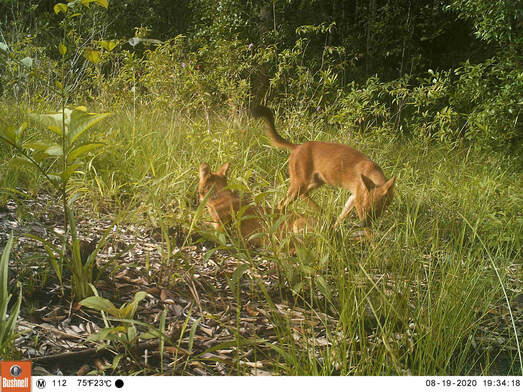
Dhole photo taken with a trail camera in Cambodia
Use the button below to make a direct donation to the Cambodia dhole program. We cover all fees to get the full funds directly to Golden Triangle Asian Elephant Foundation.
You can visit their site at: www.helpingelephants.org
You can visit their site at: www.helpingelephants.org

Current Interest and projects
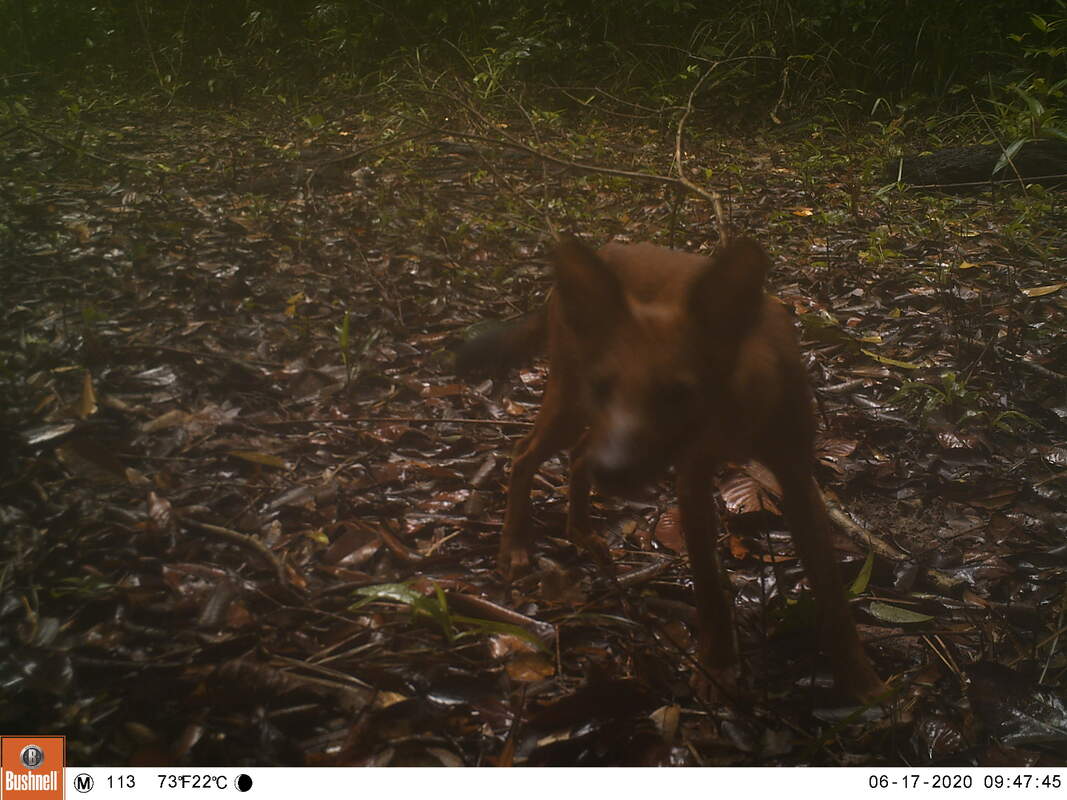
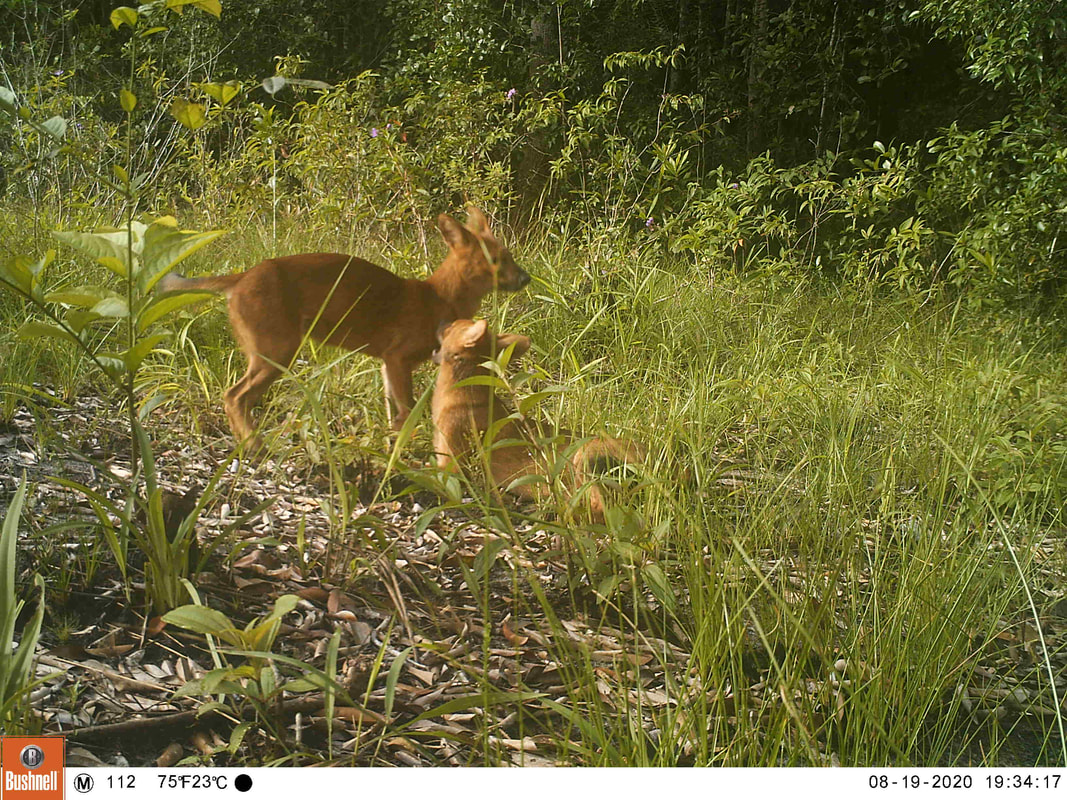
Camera trapping a local wild "high way". Recently ranger teams were able to located a well worn are that is being used by a variety of wildlife, most notably to us were dhole. The rangers suspect there are a maybe two dhole packs appose to only one they had previously know about. This area of high wildlife use would benefit greatly from some study and observation. Current cameras are being used for different projects and can not be moved to help assess the dhole and bio-diversity in the region. We want to get them cameras that can be used to study the dhole in the region as well as the ecology that supports them.
|
|
What are you supporting
A $100 donation is enough to put out one camera at the location to help monitor and estimate the dhole population in this protected reserve.
Camera footage will also help aid in better understanding dhole ecology in the region, such as prey avalibility.
Camera footage will also help aid in better understanding dhole ecology in the region, such as prey avalibility.
